
Parts by type
Plasma torch parts wear in different ways, and each one affects cut quality a bit differently. The range is grouped into clear part types so you can match wear signs to the right replacement set.
Start with the part that changes the arc
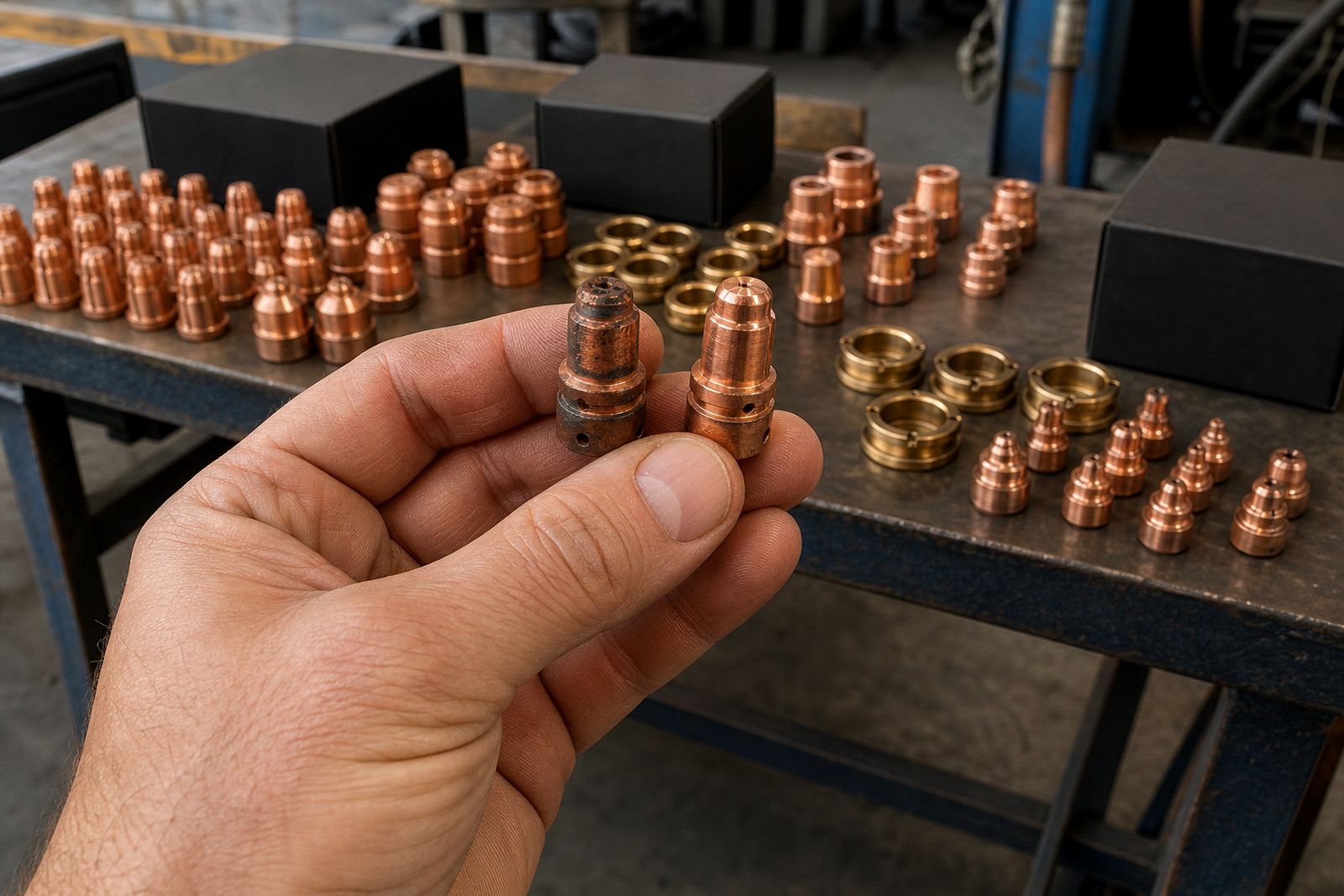
Most cutting faults show up first at the front end of the torch. The electrode carries the arc, the nozzle shapes it, the shield manages stand-off and splash, the swirl ring controls gas flow, and the retaining cap keeps the stack seated correctly. When one item is worn the others often follow sooner, so it helps to read the whole set rather than one loose part in isolation.
At Plasma Consumables we sell plasma consumables only, arranged by torch series and by part type. If you already know your torch family, you can move straight to the matching series page. Poor cut faces, hard starting and short part life usually point to a specific consumable, so identifying the likely fault first helps before you place the order.
Electrodes and nozzles do the heavy work
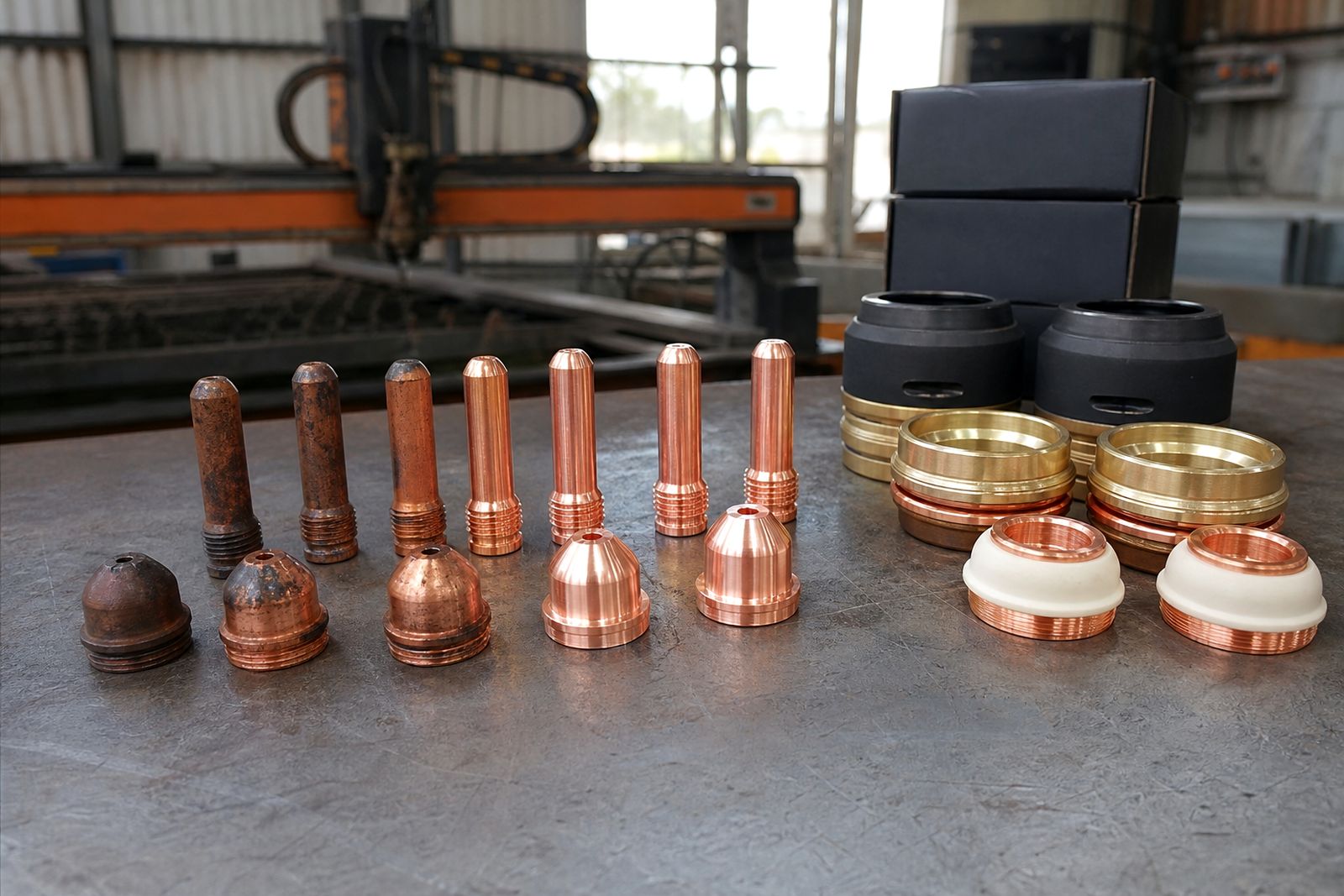
These two parts take the most punishment on day to day cutting. The electrode wears back as the insert is used up, while the nozzle orifice can bell out, go oval or pick up spatter damage. Once that pair is past its useful point, kerf width grows, bevel gets worse and starts become less consistent. Operators often notice dross before they notice the actual wear.
- Electrodes usually show a pit or crater at the insert as life runs out.
- Nozzles often show a widened hole, a rough edge or a slight out of round opening.
- Premature wear on both parts can point to poor air quality, incorrect stand-off or repeated pierces on material that is too thick for the setup.
- Changing only one of the pair can work in some cases, but many shops replace them together to keep cut quality steady.
If your torch has started misfiring or the arc wanders across the plate, the first check is normally this pair. On mechanised work the signs can be subtle at first, so keeping a used set aside for comparison is often worth it.
Shields, swirl rings and retaining caps matter more than they look
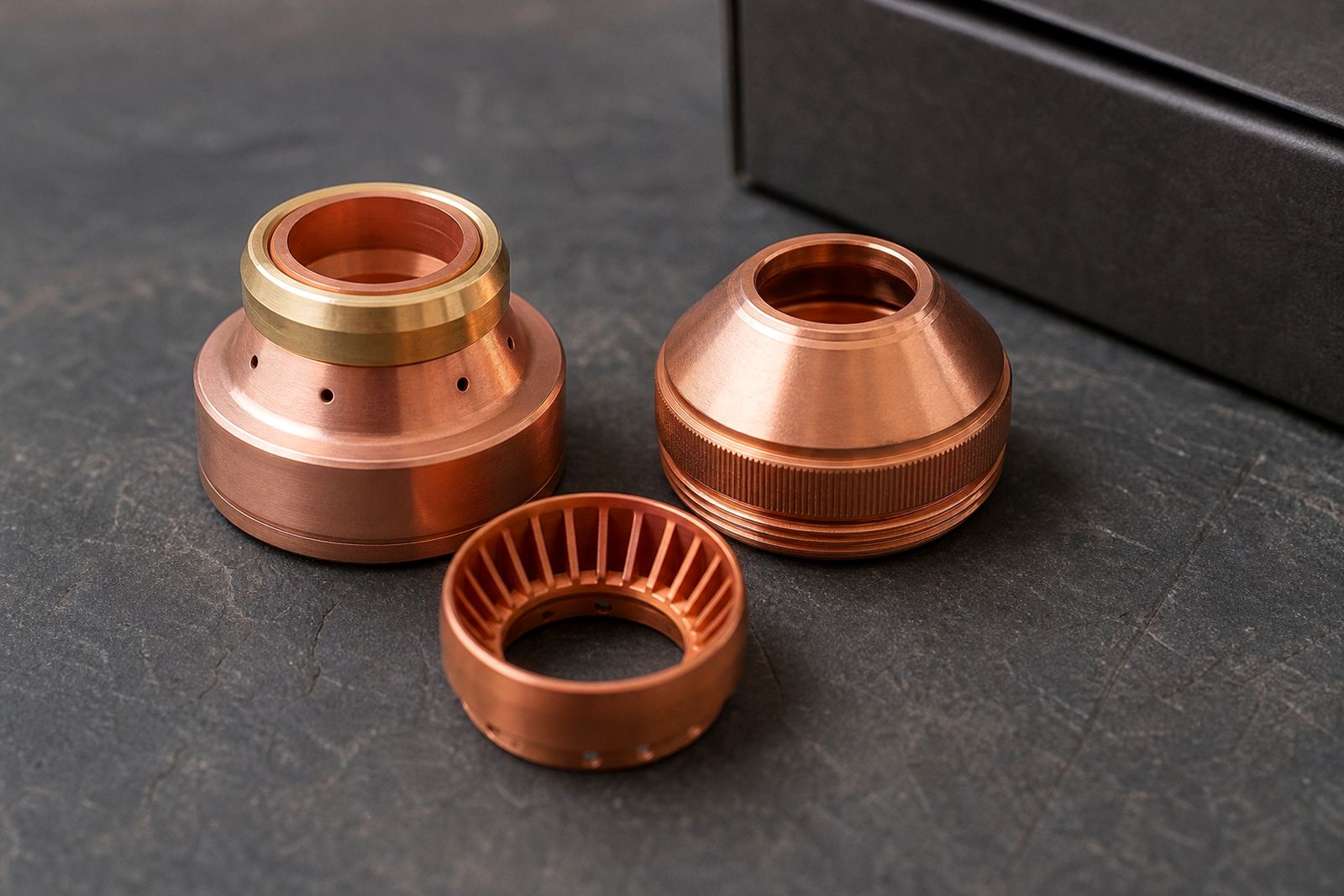
These parts are easy to overlook because they do not always show the dramatic burn patterns seen on electrodes and nozzles. Even so they have a direct effect on arc stability, gas direction and whether the torch stack stays aligned through a long run. A shield can take spatter and edge nicks, a swirl ring can crack or carbon up, and a retaining cap can distort through heat or repeated over-tightening.
- A damaged shield often shows blocked holes, heavy spatter build-up or heat marking around the front face.
- A swirl ring should be checked for cracks, chipped edges and blocked gas paths.
- A retaining cap must thread on cleanly and hold the stack firmly without cross-threading.
- If parts feel loose in the torch body, stop and inspect the full stack before the next plate goes on the bed.
When these support parts are fresh, the torch tends to start cleaner and hold a steadier cut line. When they are tired, shops often blame the nozzle first, which can waste money and still leave the fault in place.
How to tell which part to replace first
Different wear patterns produce different faults. A little comparison can save a lot of trial and error at the counter or on the floor.
- Hard starts or double arcing often point to the electrode and nozzle first.
- A ragged kerf with more bevel than usual often starts at the nozzle opening.
- Short life across a full set can suggest wet or dirty air rather than a bad batch of parts.
- Excess spatter sticking around the front end can damage the shield and then upset stand-off.
- Arc instability after a fresh electrode and nozzle change can indicate a cracked swirl ring or a cap that is not seating properly.
- Consumables burning out during repeated piercing may mean the amperage, pierce height or material thickness is not matching the torch series.
If you are unsure whether the problem belongs to the front pair or the support parts, compare a used stack to a new stack from the same torch series. Small changes are easier to see side by side, and that usually settles the matter.
Choose by torch series before you choose by shape
Many consumables look close enough to mix up in a busy shop, especially once they are out of their packets. The safer route is to match by torch series first and then by part type. The range is split across M1, M2, M3, M4 and M5 groupings as well as by part category.
M1 covers lighter hand torch work from 30 to 45 A. M2 moves into 60 to 85 A torch sets. M3 is for 105 to 125 A machine torches, M4 for 200 A mechanised torches, and M5 covers fine-cut and marking setups. If you know the amperage band and torch family but not the exact item name, start there and narrow it down from the full stack.
Shops around Kempton Park often collect from our counter when they need to match a worn sample, while courier orders go out to every province. For mixed fleets, keeping parts separated by series in labelled bins helps avoid those small swaps that lead to poor starts and wasted sheets.
Use wear guides and bulk options together
Consumable life guides help when comparing wear across the stack. A worn electrode tells a different story from a nozzle with splash damage, and air quality can shorten life across the set even when the torch settings are correct. If your shop burns through the same front-end parts every week, bulk packs make stock control easier and reduce odd single item gaps.
For regular cutting rooms, the refill subscription is a neat way to keep common parts moving through stores without last minute scrambles. If you need help matching a torch series to the right consumables, send the details through our contact form and include the series, amperage range and which parts are wearing out first.
Questions we get asked
Do you sell complete plasma machines or power units?
We sell plasma consumables only, grouped by torch series and by part type.
Can I buy just one part type instead of a full set?
Electrodes and nozzles are separated from shields, swirl rings and retaining caps so you can order the exact parts you need.
What should I send if I am not sure which consumable is worn?
Send the torch series, amperage range, the part names if known, and a short note on the fault such as hard starts, bevel, dross or short life.
Tell us about the job
Send sizes, materials and where you are through our contact form, and we will come back with the practical options.
Open the contact form