
Shields, swirl rings and retaining caps
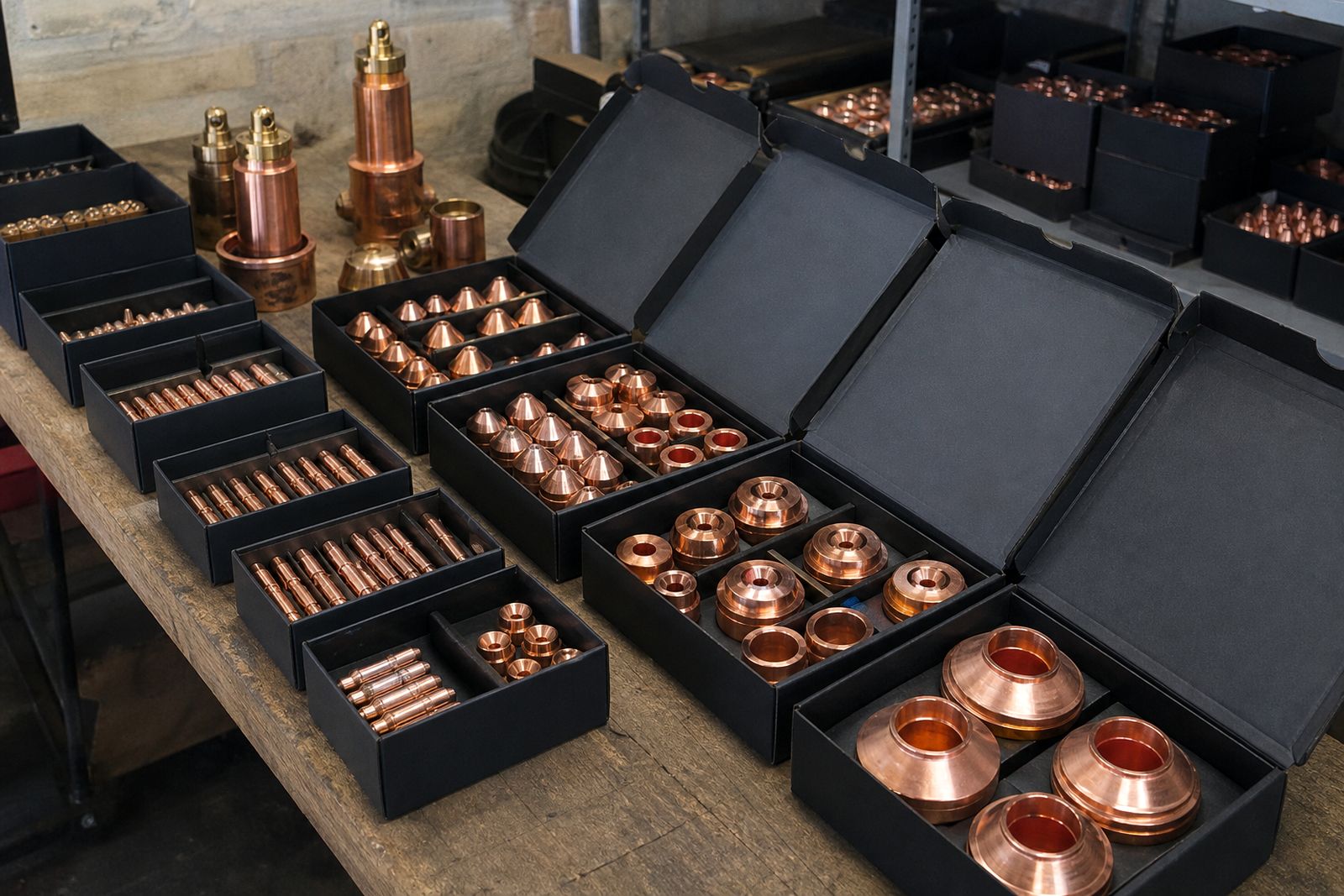
These are the plasma parts people replace less often, yet they can spoil arc stability and edge quality when left too long. We stock shields, swirl rings and retaining caps by torch series so cutting shops can match the right part to the right torch.
What these parts do in the torch
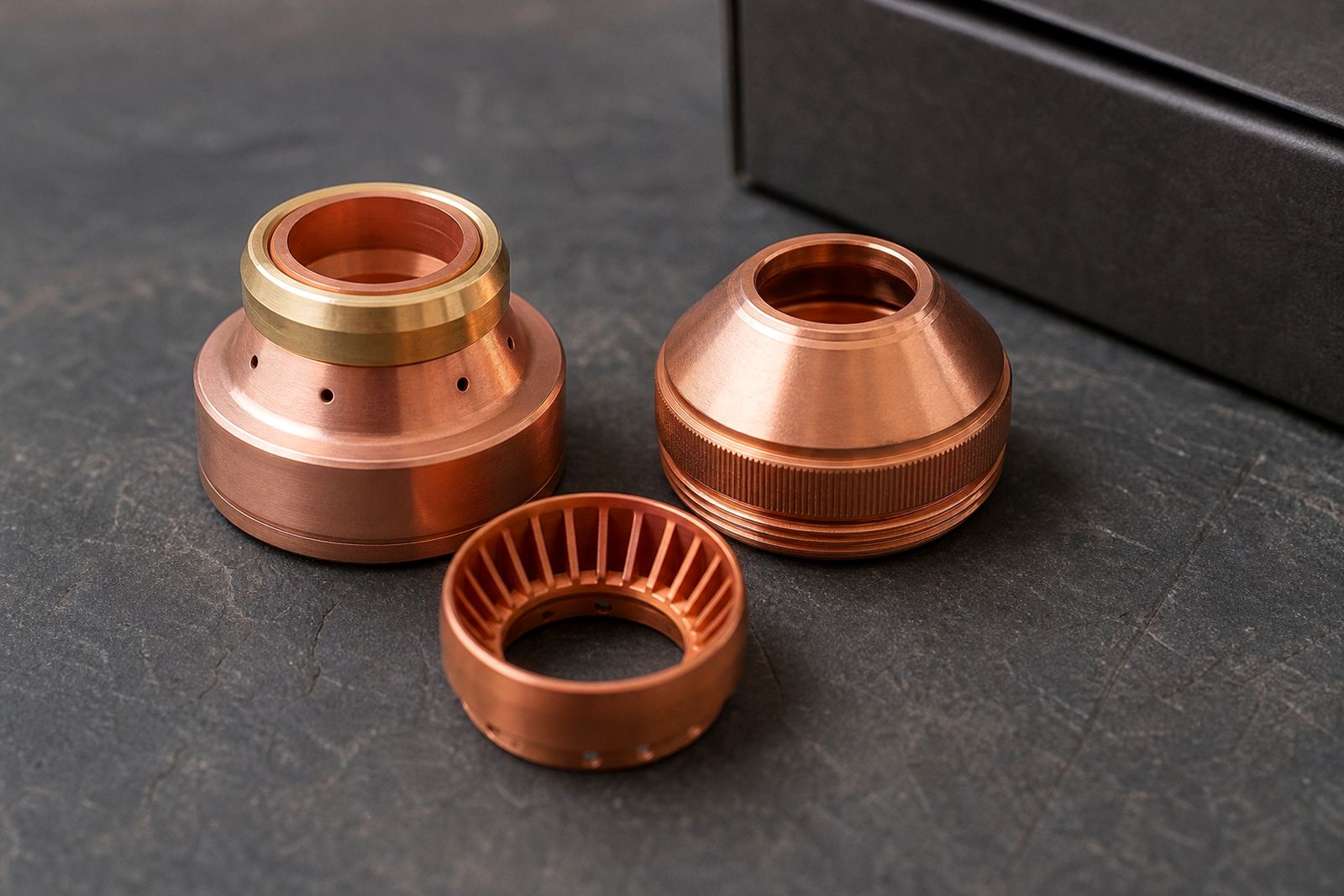
Shields, swirl rings and retaining caps sit right in the path of airflow, alignment and heat. A shield protects the front end from spatter and keeps stand-off behaviour more predictable. The swirl ring directs gas around the electrode and nozzle so the arc stays centred. The retaining cap clamps the stack correctly and keeps the parts seated where they should be.
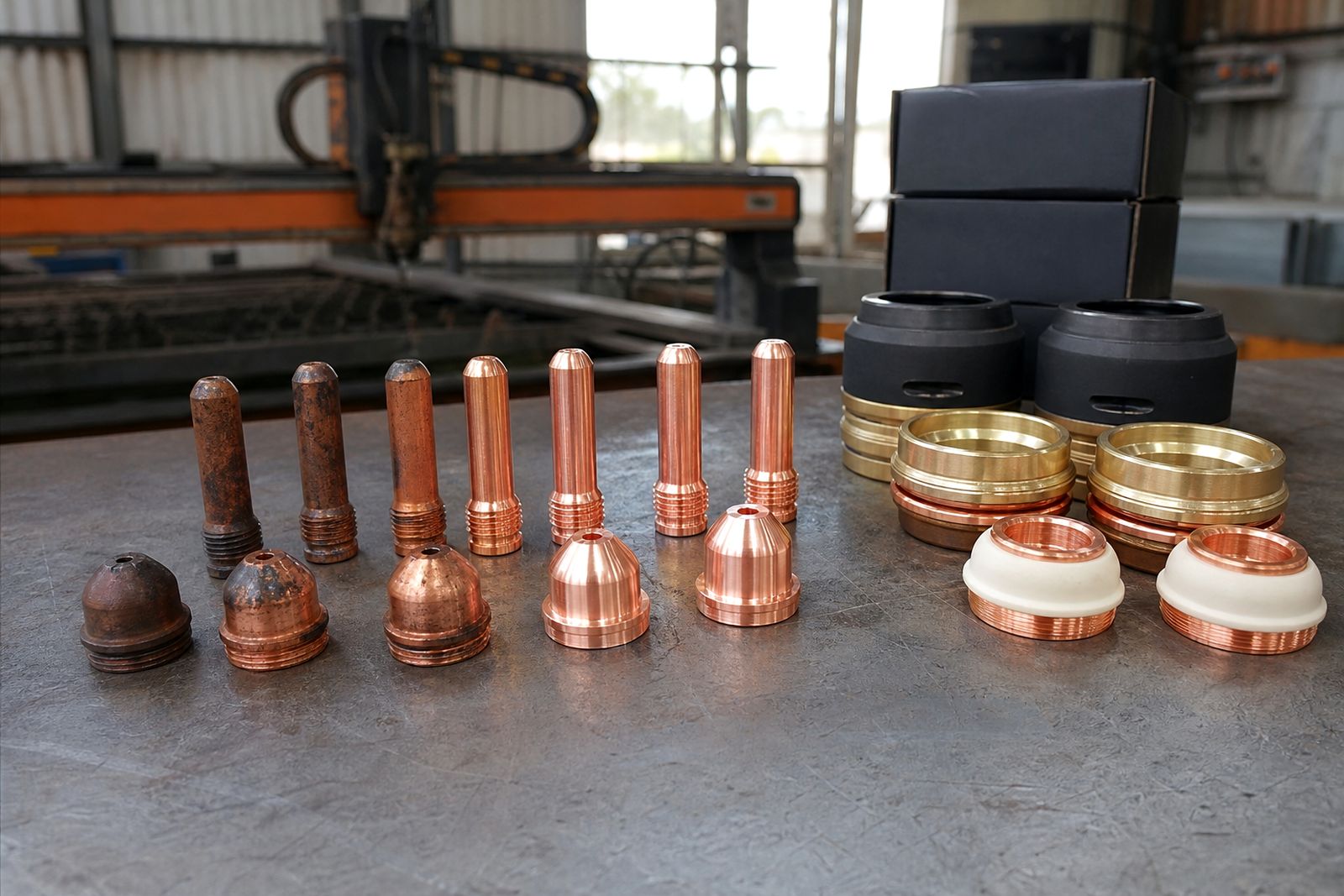
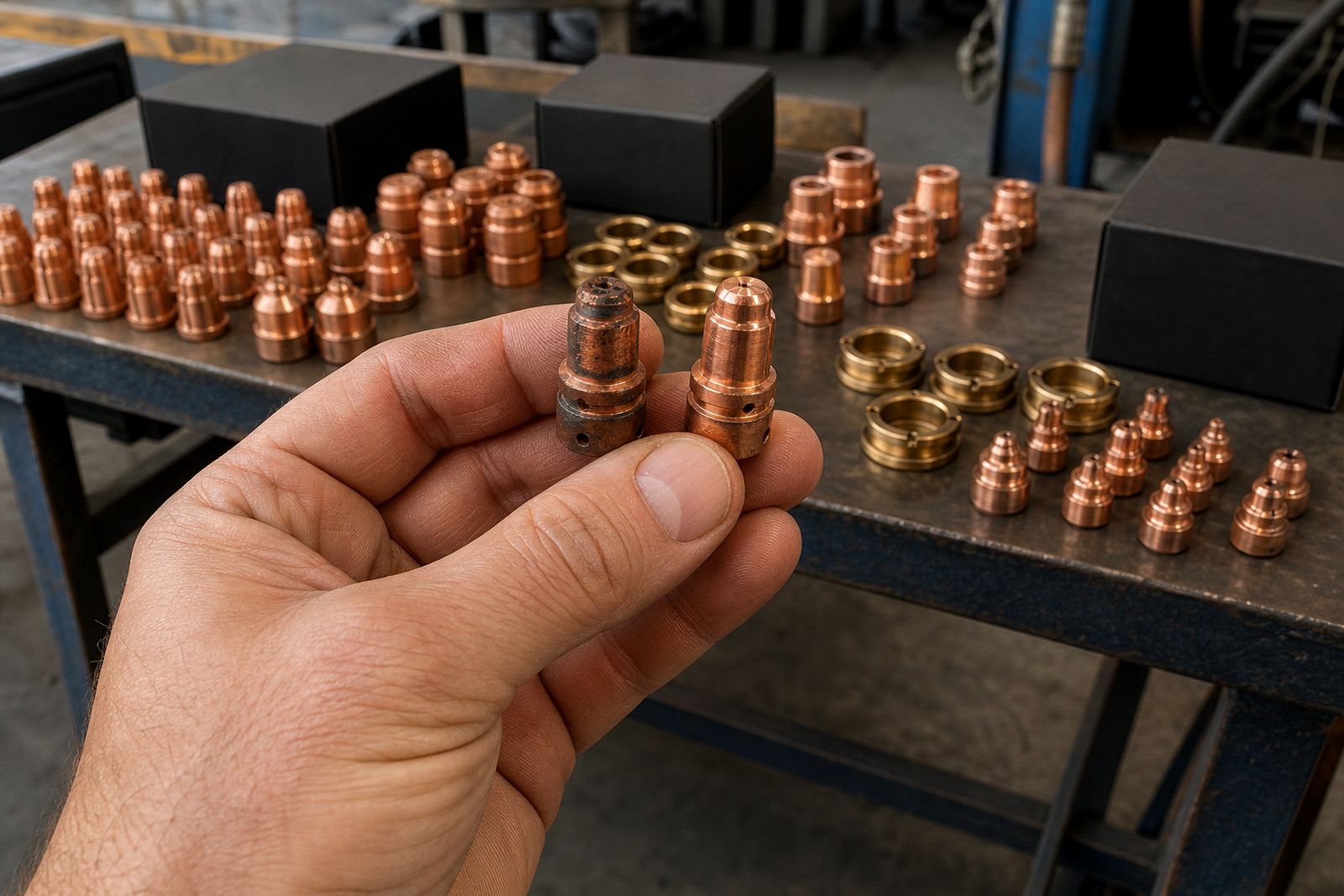
When one of these pieces is worn, cracked or cross-threaded, the symptoms often look like a nozzle problem. You may see a wandering arc, rough kerf walls, heavier dross, poor starts or consumables burning out early. These parts should be checked as part of a full torch-front change and whenever the machine operator spots obvious damage.
- Shields for standard cutting, drag work, mechanised cutting or fine-cut sets.
- Swirl rings matched to the correct amperage family and torch body.
- Retaining caps for hand and mechanised torch fronts.
- Single items and bulk pack options where the series allows.
Sizes, options and working limits
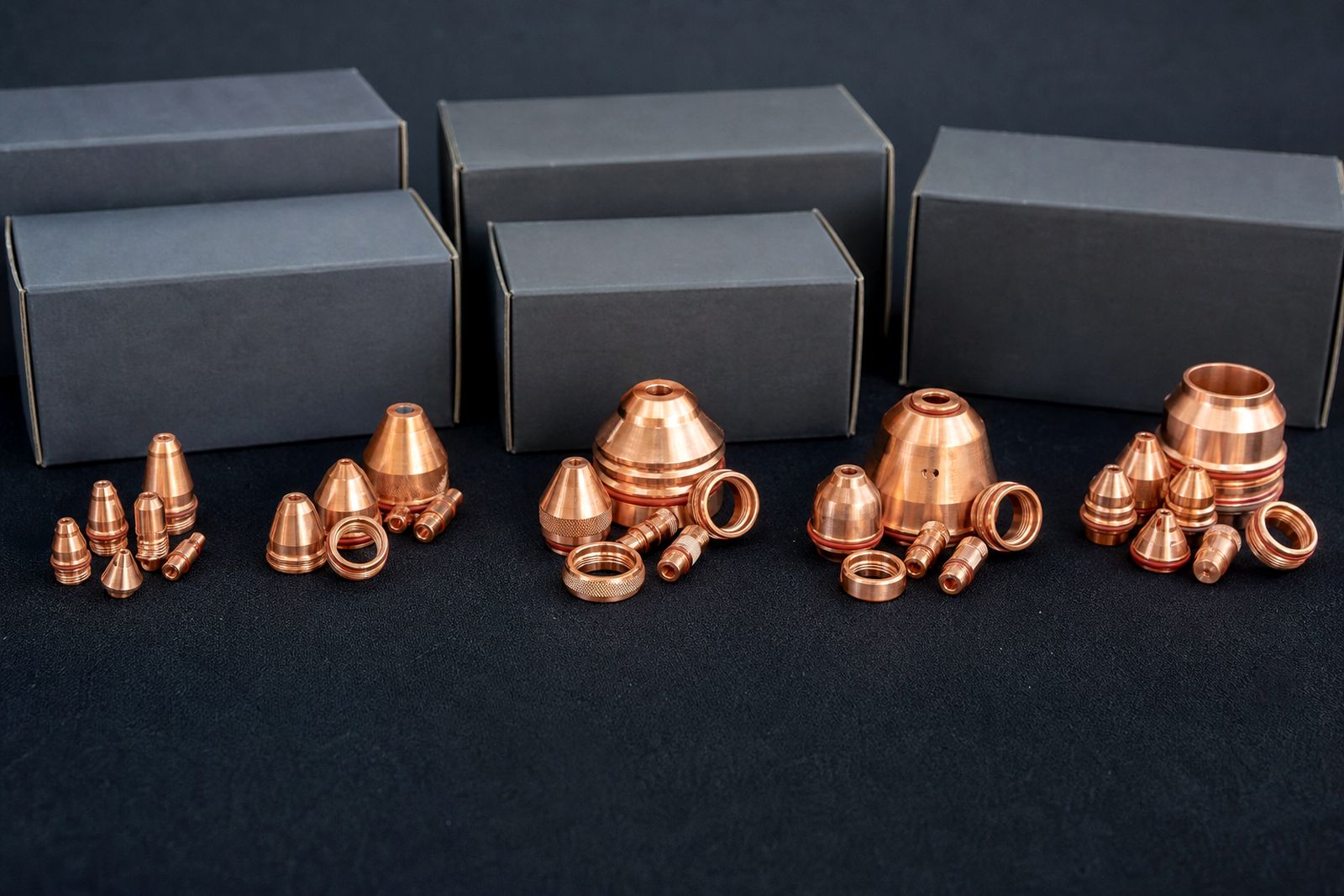
We supply these parts by torch series rather than by guesswork. The main split is between hand torches, heavier manual torches, machine torches, high-current mechanised torches, and fine-cut or marking sets. Each series uses its own dimensions, gas passages and front-end stack height, so a part that looks close is not close enough once the arc starts.
Working limits are tied to the torch series and current range. A light hand torch set in the 30 to 45 A class uses a different shield profile and swirl-ring geometry from a 60 to 85 A torch. Machine torches in the 105 to 125 A range need parts built for longer duty cycles and steadier gas flow. The 200 A mechanised class runs hotter and will punish the wrong cap or ring very quickly.
- M1 series: 30 to 45 A hand torch consumable sets.
- M2 series: 60 to 85 A torch sets for heavier manual work.
- M3 series: 105 to 125 A machine torch front ends.
- M4 series: 200 A mechanised torch front ends.
- M5 series: fine-cut and marking consumable sets.
If you are unsure, send the torch series, amperage and whether the torch is hand-held or mechanised through our contact form. That saves a lot of avoidable mix-ups.
Where they suit and where they do not
These parts suit cutting shops that already know their torch series and want consistent stock on the shelf. They are a good fit for steel service centres, light fabrication shops, HVAC duct work, sign-cutting, bracket production and plate profiling where a damaged front-end part can upset a full day of cutting. In coastal areas, careful storage matters more because damp packaging and dirty air can shorten part life before the shift is done.
These parts are for torch-series matched fitment within the correct torch family. They also do not solve problems caused by wet air, incorrect current, poor pierce height, worn leads or a torch head that has taken a knock. If the cap threads are sound but the torch still leaks gas or misaligns parts, the fault may sit elsewhere in the torch assembly.
- Best suited to torch-series matched replacements.
- Useful for planned stockholding in bulk packs.
- Not a substitute for clean dry air.
- Not intended for mismatched amperage stacks.
- Not sold as repair work or torch rebuilds.
Fitment notes that matter on the floor
Fitment is simple when the parts are clean and matched correctly, but a few small checks make a big difference. Remove spatter from the shield seat, inspect threads on the retaining cap, and look for hairline cracks on the swirl ring. Even a tiny chip around a gas port can upset swirl and make the arc drift. If the torch uses an O-ring in the front-end stack, inspect that as well before closing the cap.
Do not overtighten the retaining cap. Hand-tight seating is normally what keeps the stack true, while excessive force can distort threads or pinch the consumables out of line. On mechanised torches, confirm that the shield type matches the process you run, especially if the line switches between standard cutting and fine-detail work. A rushed fit can look fine and still cut skew just enough to waste plate.
For site needs, the main requirement is clean dry compressed air and a torch front free of dirt, oil and spatter. Good habits and the right matched parts keep the torch front working properly.
Care, storage and replacement rhythm
Because these parts often outlast electrodes and nozzles, they can be forgotten. That is when small faults turn into expensive cut issues. Keep unopened stock dry, sealed and away from grinding dust. At the machine or cutting bench, store active parts in a lidded bin rather than loose on a shelf where swarf can get into gas passages.
A useful habit is to inspect the shield and cap every time you change an electrode and nozzle, and to inspect the swirl ring every second front-end change or whenever cut quality shifts without a clear reason. Burn marks, chipped faces, blocked ports, distorted threads and heat glazing are all signs the part is near the end. A swirl ring may look nearly fine and still be the problem, which catches people out often.
- Keep packs closed until needed.
- Do not mix used and new parts in one tray.
- Replace any cracked swirl ring immediately.
- Discard caps with damaged threads or poor seating.
- Check shields for spatter build-up and face wear.
What to tell us when you enquire
We sell plasma consumables only, by torch series, so the most useful information is the series and the exact part type you need. If you are replacing worn stock from the torch front, tell us what symptom you saw on the cut as well. That can help narrow down whether you need only a shield, ring or cap, or a full front-end refresh. A clear brief avoids ordering parts that almost fit but do not run properly.
Please include the torch series, amperage range, hand or mechanised use, and whether you want singles or bulk packs. If the job involves fine-cut or marking, say so upfront. Shops that use repeat stock levels can also ask about the refill subscription so common wear items keep moving through stores without last-minute scrambles.
- Torch series, such as M1, M2, M3, M4 or M5.
- Part type needed: shield, swirl ring or retaining cap.
- Amperage class and process type.
- Hand torch or mechanised torch.
- Quantity needed, including bulk-pack preference.
- Any visible wear or cut symptoms from the old part.
What our Plasma Consumables customers say
Verified Google reviews
Questions we get asked
Can I fit a shield or swirl ring from another amperage range if it threads on?
Use only the correct torch series and amperage class. If they do not match, gas flow and stack height can shift enough to affect starts, kerf quality and consumable life.
How do I know whether the swirl ring is causing the problem?
Look for unstable starts, a wandering arc, uneven cut faces or early nozzle wear after a normal electrode change. A cracked ring or blocked gas port is a common cause.
Do you sell complete torch assemblies or repairs?
We supply plasma consumables only, by torch series, including electrodes, nozzles, shields, swirl rings and retaining caps.
Also worth a look
Tell us about the job
Send sizes, materials and where you are through our contact form, and we will come back with the practical options.
Open the contact form