Electrodes and nozzles
Electrodes and nozzles are the consumables that take the hardest wear in a plasma torch. They are best treated as a matched pair, because a worn part on either side can shorten cut quality and consumable life.
The pair that carries the arc
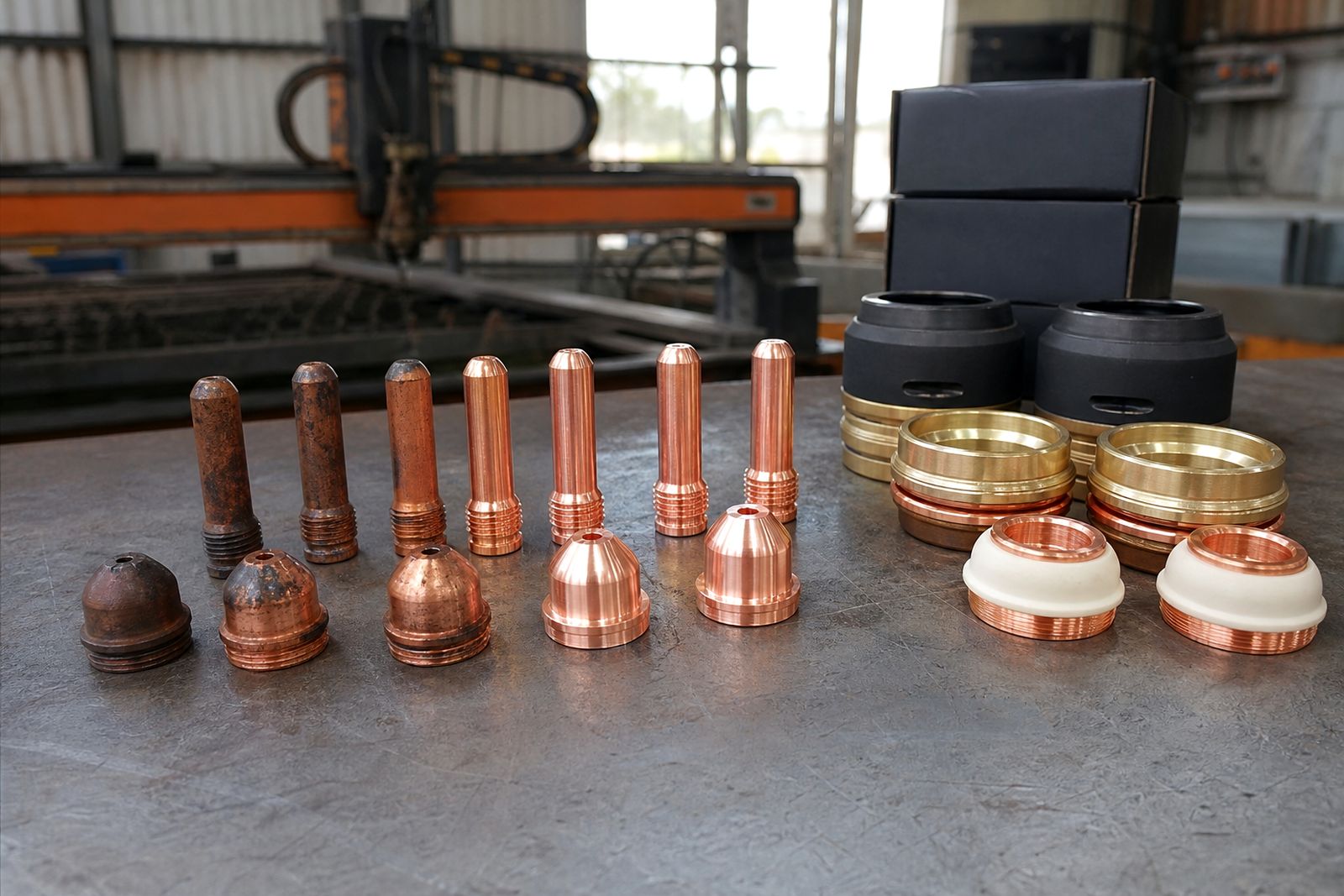
An electrode starts and carries the arc, while the nozzle constricts that arc through its orifice. In day to day cutting these are usually the first two parts to show wear, especially on production work, pierced starts and jobs with poor air quality. When one part has gone off spec the other part often follows quickly, so changing them together is normally the cleanest way to keep edge quality stable.
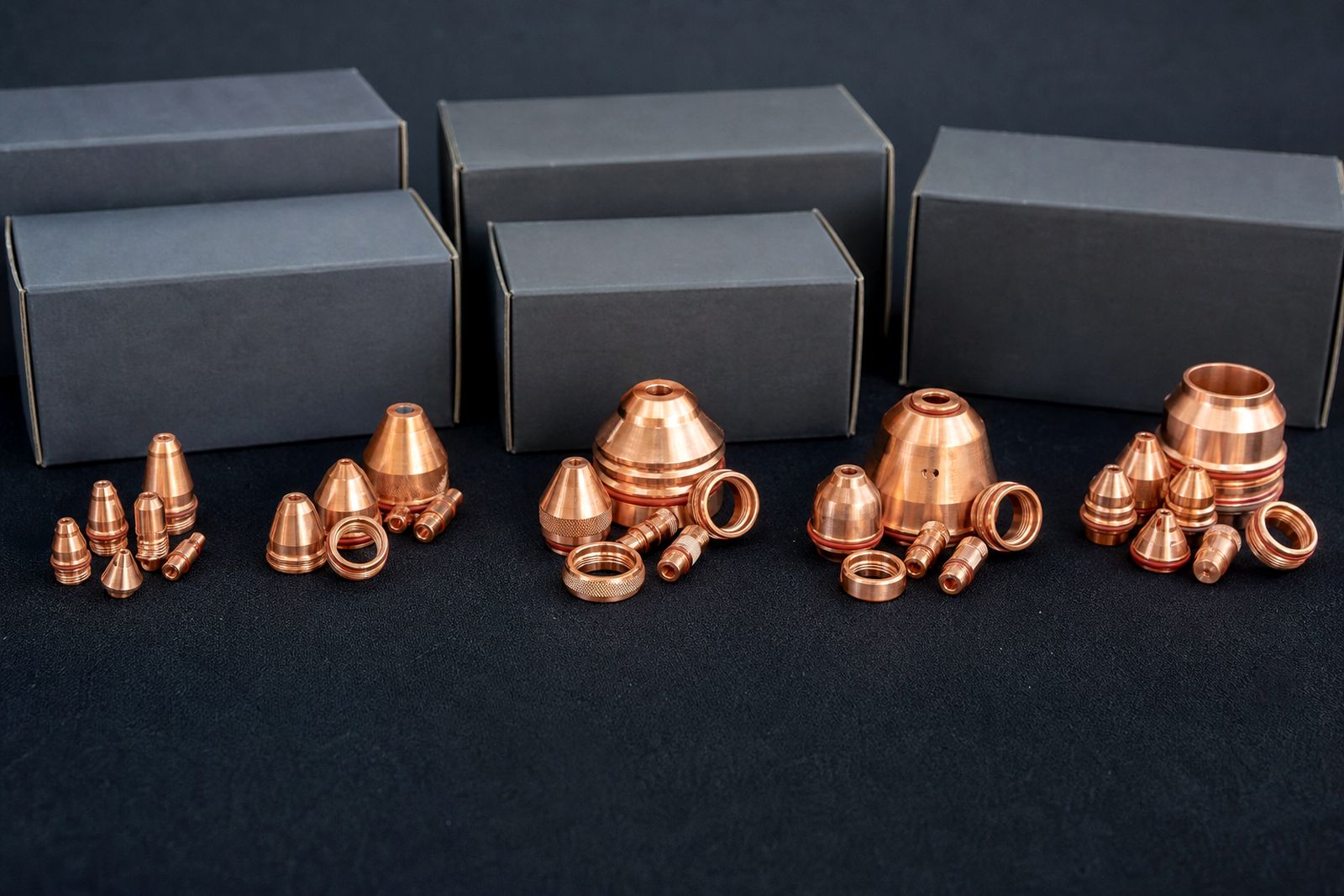
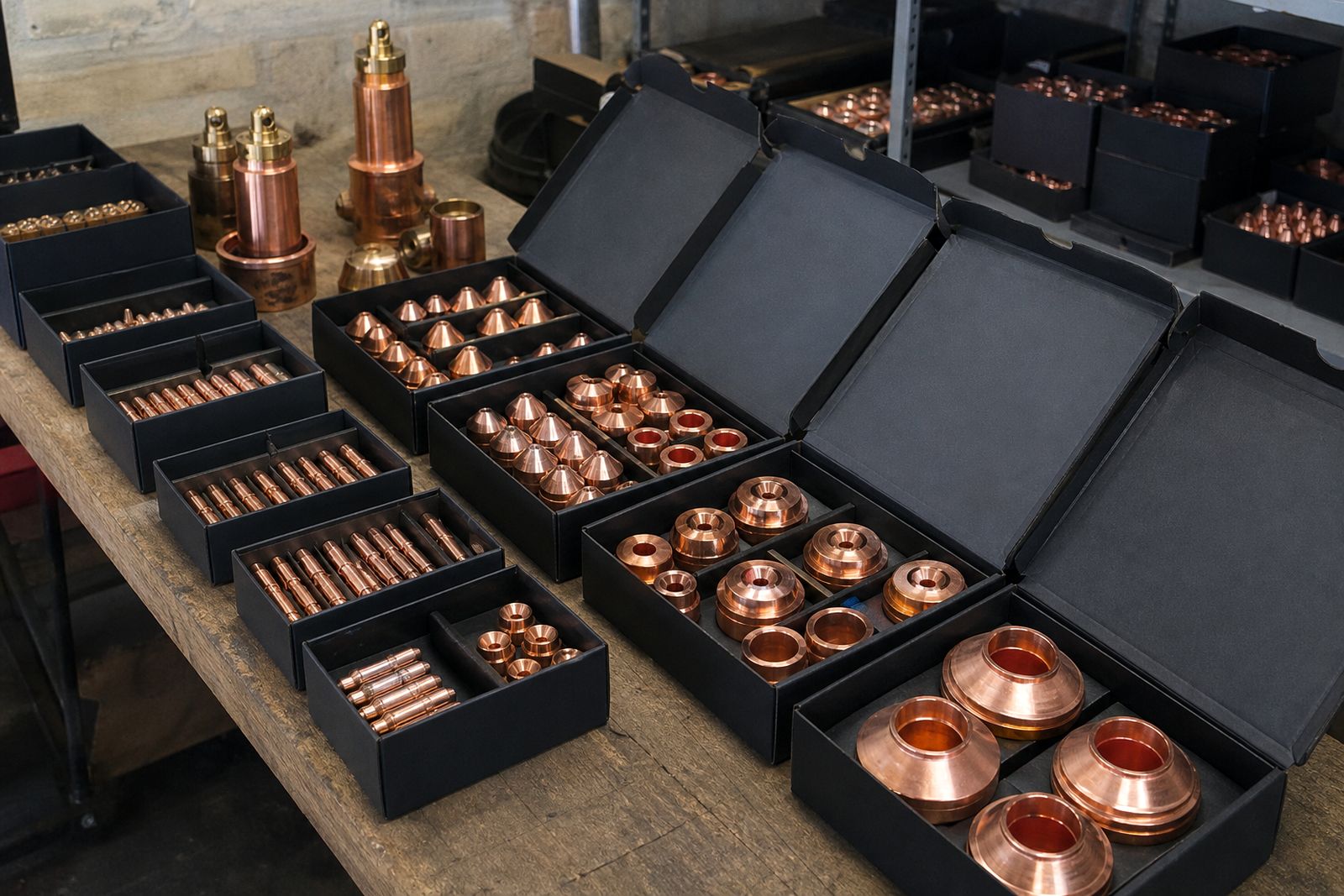
We stock electrodes and nozzles by torch series rather than by machine model. That matters on mixed shops where one power source may run more than one torch body. Our range covers M1 hand torch consumables at 30 to 45 A, M2 at 60 to 85 A, M3 machine torch consumables at 105 to 125 A, M4 mechanised torch consumables at 200 A, and M5 fine-cut and marking sets.
- Electrodes for standard cutting duty
- Nozzles sized to the torch series and amperage window
- Standard cut and fine-cut options where the series allows it
- Single packs and bulk packs for higher usage shops
How sizes and amperage limits affect the cut
Nozzle selection is tied to amperage and intended duty. A smaller orifice gives a tighter arc and cleaner detail on thinner plate, but it must stay within its rated current window. A larger nozzle can carry more current and suits thicker material, yet it will not hold the same fine kerf on thin sheet. Electrodes must match that current range and the correct torch series, otherwise starting becomes erratic and nozzle life drops off.
For hand torches in the M1 range, most buyers are cutting lighter section steel, maintenance brackets and general fabrication parts. M2 suits busier cutting rooms and thicker plate. M3 and M4 are generally for machine torches where straightness, pierce performance and longer runs matter more than hand control. M5 fine-cut and marking consumables are chosen where line quality and light gauge work matter more than raw output.
- M1: 30 to 45 A for lighter hand cutting
- M2: 60 to 85 A for general fabrication duty
- M3: 105 to 125 A for machine torch work
- M4: 200 A for heavier mechanised cutting
- M5: fine-cut and marking applications
If the job calls for long mechanised runs, repeated piercing of thicker plate or marking detail, tell us that up front. It helps us point you to the right nozzle type and the right torch family.
Where these parts suit the job, and where they do not
Electrodes and nozzles suit any plasma cutting setup that already has the correct torch series in service. They are used in fabrication shops, maintenance departments, agricultural repair, gate and trailer work, HVAC duct cutting and plate processing lines. In Gauteng workshops a common pattern is mixed work on mild steel with occasional stainless or aluminium, and that can change wear rates a fair bit.
Problems caused by the wrong torch, poor air supply, damaged leads, incorrect pierce height or worn shields and swirl rings need attention at source. We supply plasma consumables only, including electrodes, nozzles and related wear parts. The right enquiry is always about the torch series, current range and part type you need.
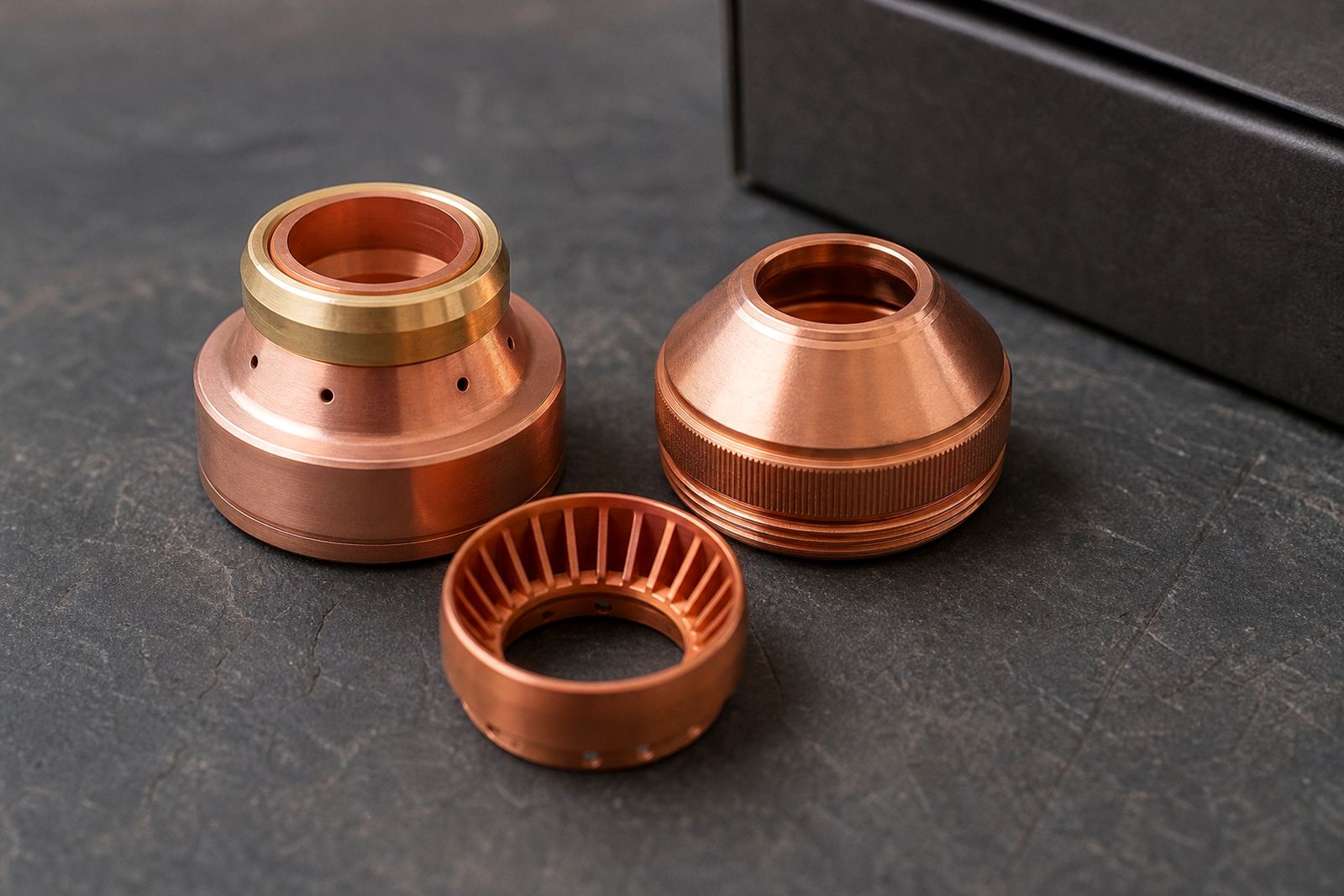
If you are chasing cleaner edges but your torch body is cracked or the retaining parts are distorted, a fresh electrode and nozzle alone may not hold the line for long. In that case it makes sense to check the related consumables listed under shields, swirl rings and retaining caps before you place the next batch on the shelf.
Fitment notes from the counter
These parts are small, but fitment discipline matters. Before installing a new set, make sure the torch is cool, threads are clean and the seating faces are free of spatter. Cross-threading a nozzle or forcing an electrode into a dirty seat can spoil the next cut before the arc even starts. On machine torches, incorrect height control and poor alignment show up sooner than most operators expect.
Compressed air quality is often the hidden factor. Water, oil carry-over and dirt shorten life and can enlarge the nozzle orifice unevenly. Around the Highveld dry dust is common, and in coastal shops humidity can push more moisture into the line if filtration is neglected. A decent filtration setup and regular drain routine are worth more than trying to stretch another shift out of a worn set.
- Confirm the torch series before ordering
- Match the nozzle to the intended amperage range
- Keep threads and seats clean before fitment
- Replace matched wear parts when cut quality drops off
- Check air filtration if life is shorter than expected
Reading wear before the edge goes rough
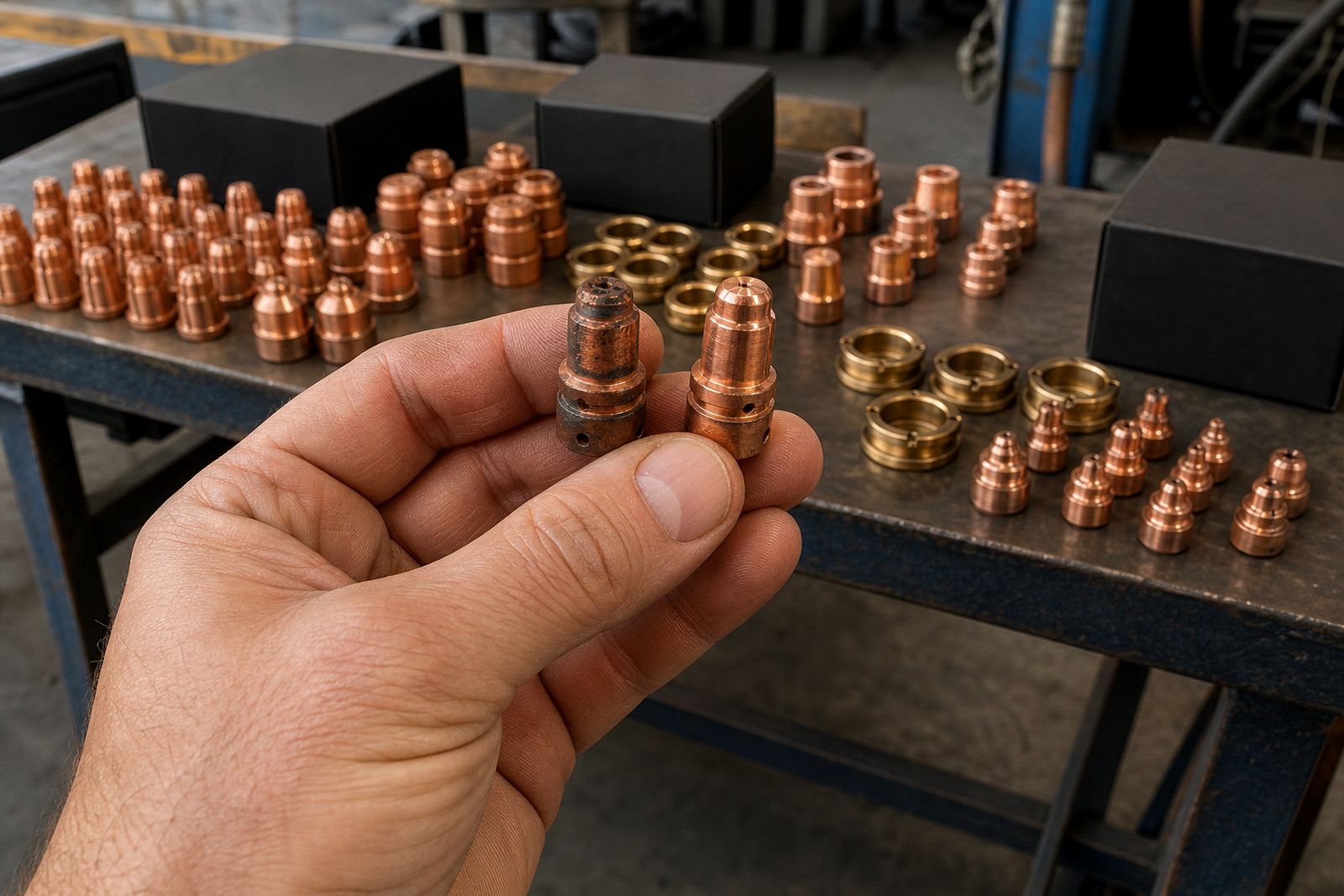
A worn electrode can show a deep pit at the emitter end, while a tired nozzle often shows an enlarged or out of round orifice. Once either part has drifted too far, the arc starts to wander and the cut face gets rougher, with more bevel or dross. Operators sometimes try to swap only the visibly worse part, but that usually gives a short improvement and then the cut falls away again.
For shops that cut daily, keeping a small shelf stock by torch series is usually the easiest route. Bulk packs help where the same torch family runs across several bays or shifts. If your team prefers a standing top-up pattern, our refill subscription can keep regular items moving without last minute shortages from the rack.
We also keep consumable-life guides for buyers who want to compare wear patterns against amperage, material thickness and air condition. That is especially useful where one shop has both hand torches and mechanised stations using different current bands.
What to send with your enquiry
The best way to get the right electrode and nozzle set is to send the working details rather than only a photo of the old part. If there is any number stamped on the consumable, include it, but the torch series and amperage matter more than a worn sample with discoloured edges. You can send the details through our contact form and collect from our Kempton Park trade counter or arrange courier delivery anywhere in South Africa.
- Torch series: M1, M2, M3, M4 or M5
- Hand torch or machine torch
- Amperage range used most often
- Main material and usual thickness in millimetres
- Standard cutting, fine-cut or marking requirement
- Single packs, bulk packs or refill subscription interest
Where a workshop is running mixed thickness on one torch, mention the thinner and thicker ends of the range. That helps avoid buying a nozzle that suits one job and causes problems through the rest of the week.
What our Plasma Consumables customers say
Verified Google reviews
Questions we get asked
Should electrodes and nozzles always be replaced together?
In most cases yes. If one part is worn, the other has usually taken enough strain to affect arc shape, starts or edge finish. Changing both together tends to give steadier results and avoids wasting a fresh part against a tired one.
Can I order by machine model instead of torch series?
It is better to order by torch series and amperage band. We sell plasma consumables only, by torch series, so that is the most reliable way to match the parts.
Do you sell power units, torches or repair services?
Plasma Consumables supplies plasma consumables only, including electrodes, nozzles and related wear parts. We do not sell machines, tables, power units or repairs.
Also worth a look
Tell us about the job
Send sizes, materials and where you are through our contact form, and we will come back with the practical options.
Open the contact form