

Air quality and part life
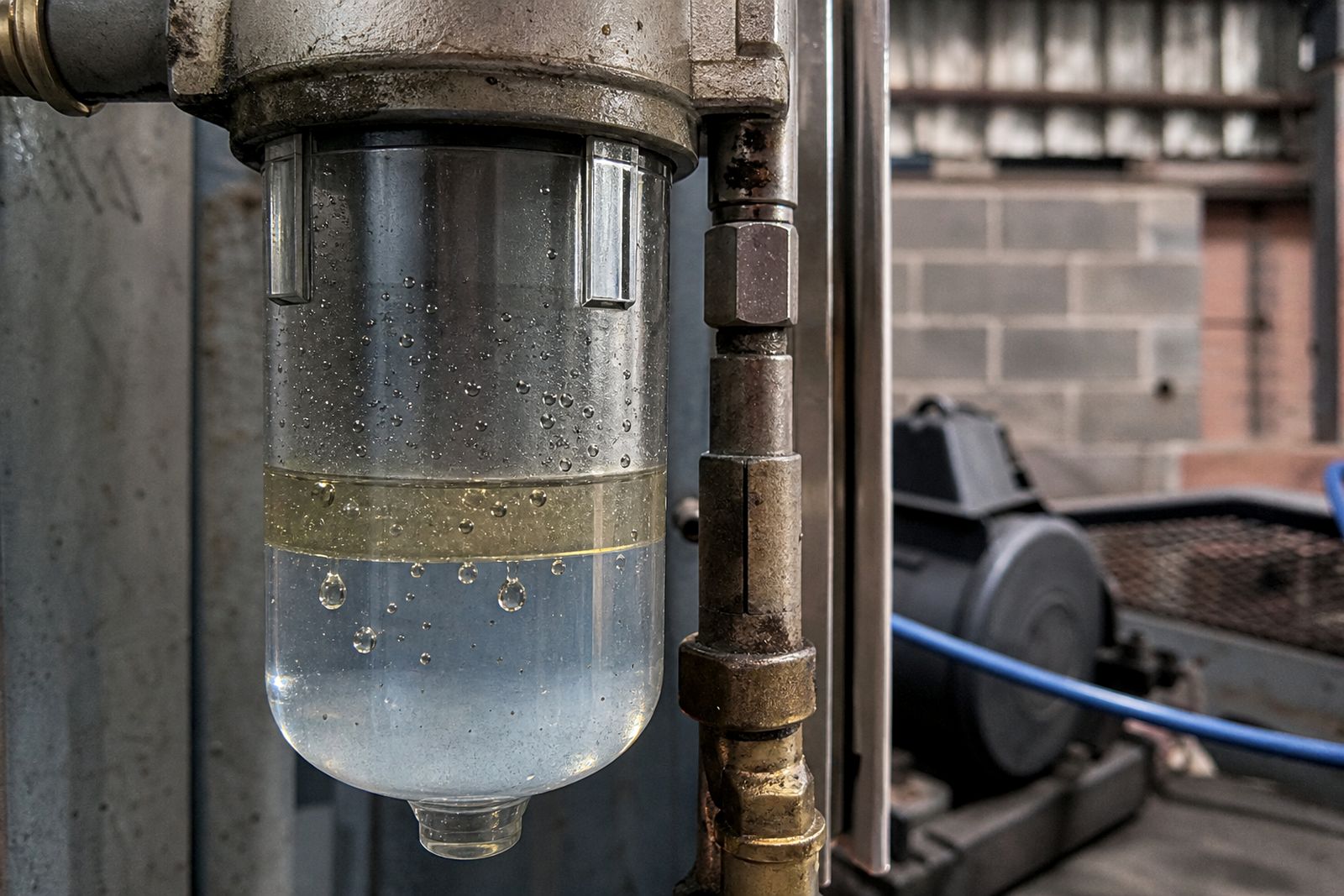
A torch can burn through a full set of parts long before its normal service window if the air line is carrying moisture or oil. The damage often looks like bad cutting settings at first, but the cause is usually sitting upstream in the air system.
What bad air does inside the torch
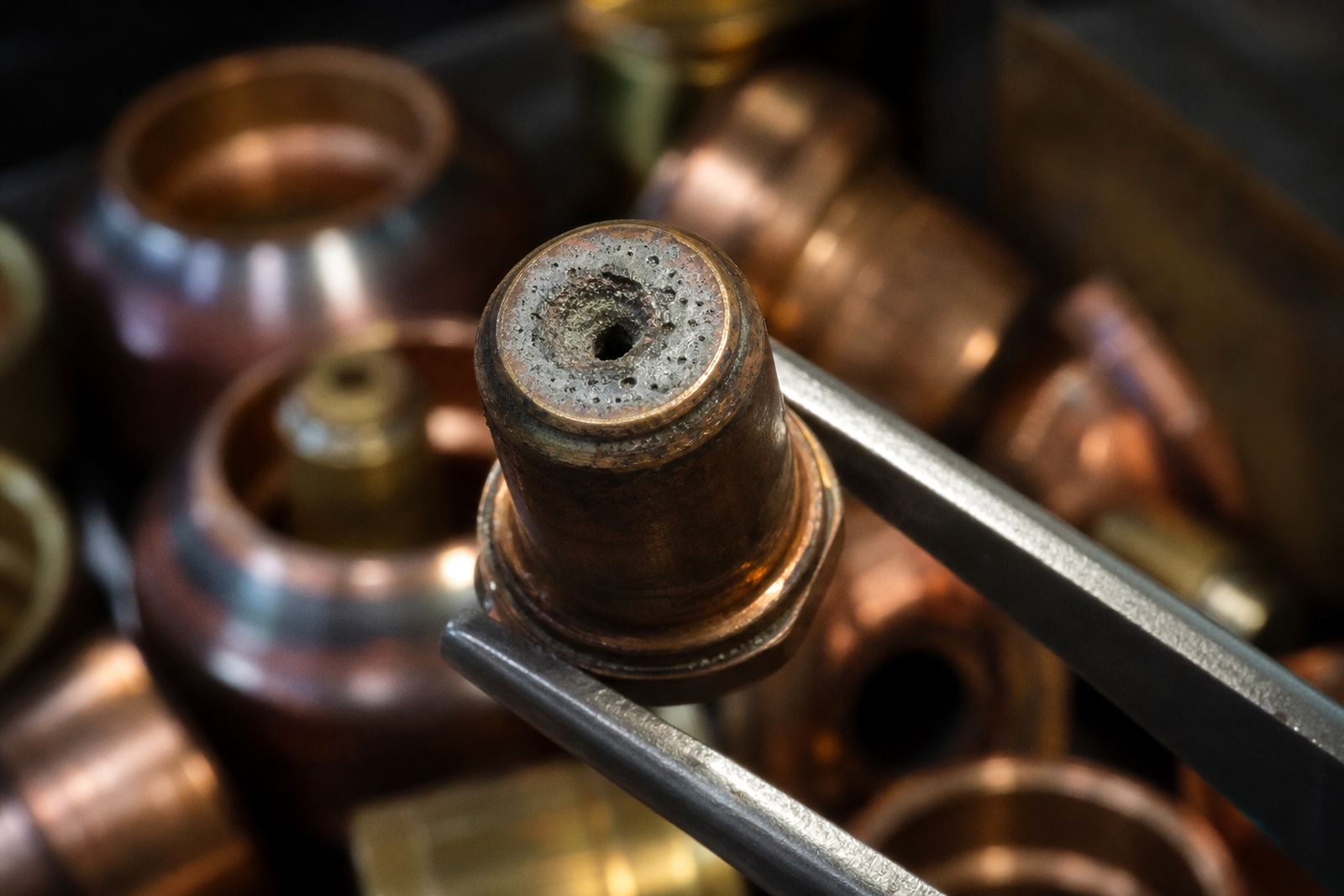
Plasma consumables live in a very hot, fast moving stream. When that stream is clean and dry, the electrode, nozzle, shield and swirl ring wear at a steadier rate and the cut stays predictable. Add water droplets, compressor oil mist or fine dirt and the wear pattern changes sharply. Arc starting becomes less consistent, nozzle orifices lose shape sooner and the electrode pit deepens faster than it should.
Moisture is especially hard on part life because it does not always show up as obvious water spitting from the line. In many Gauteng workshops the line looks fine early in the morning, then trouble starts after a few hours once the compressor is hot and the receiver has built up condensate. Oil carryover can be even harder to spot. A line can feel dry by hand yet still pass enough vapour to contaminate the torch.
- Electrodes develop a deeper pit earlier than expected.
- Nozzles lose a clean round opening and start giving a wandering arc.
- Shields show more heat marking than the cutting hours suggest.
- Consumables that should wear together start failing one by one for odd reasons.
The workshop signs most teams notice first
Few cutting shops start by blaming air quality. The first complaint is normally poor edge quality, more dross, wider kerf or an arc that feels unstable on starts. Operators may lower speed, adjust height or swap parts, and for a short while the machine seems better. Then the problem returns after only a small amount of cutting. That repeat failure is the clue.
One East Rand workshop cutting brackets and base plates saw nozzles lasting barely half the usual run. The operator changed amperage settings, checked earthing and replaced a worn lead. Nothing held. The real issue was a neglected drain on the compressor receiver and a water trap mounted too close to the hot compressor line. By midday the air reaching the torch was warm and wet, and part life fell away with it.
- Rough starts on the first pierce after a pause.
- Part life that varies wildly from one shift to the next.
- More spatter around the nozzle face.
- Cut quality that worsens as the day gets hotter.
Where the contamination usually comes from
Most air line contamination starts long before the torch. Compressors naturally make condensate, and our local weather does not help. Summer humidity, sharp day to night temperature swings and long pipe runs across warm factory space all push water out of the compressed air stream. If the receiver is not drained often enough, the line carries that moisture forward.
Oil enters the system from compressor carryover, neglected separator elements or old hoses that hold residue. Dirt comes from rust inside pipework, scale in older lines and general workshop dust. Even when each contaminant is present in a small amount, the combined effect inside the torch is noticeable. Plasma cutting is not forgiving when the gas stream is dirty.
Placement matters more than many shops expect. A filter installed straight after a hot compressor does not get the best chance to remove moisture because the air has not cooled enough for water to drop out. That is why line layout, cooling distance and proper drainage all count just as much as the filter bowl itself.
Checks that help before you open another packet
When consumable life drops suddenly, start with the air system before blaming the torch series. A short inspection can save a lot of wasted parts. Look at the filter bowls, the receiver drain and any signs of milky residue in the line. Check whether the problem appears only later in the shift. If it does, heat and condensate are likely involved.
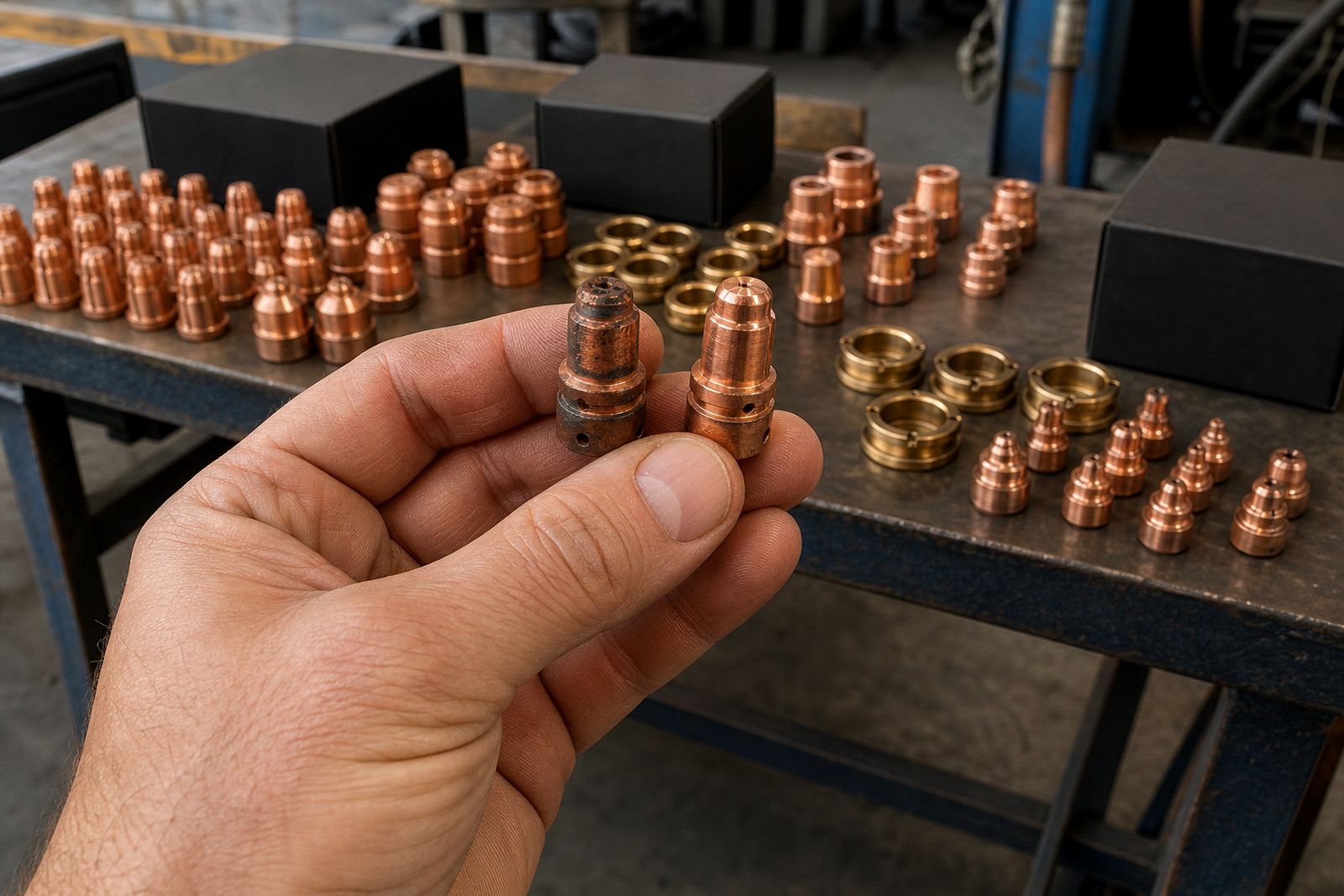
It also helps to compare worn parts rather than only the latest failed one. If the electrode is heavily pitted and the nozzle opening is distorted after relatively little cutting, contamination is a strong suspect. If shields are discoloured much sooner than normal, the gas stream may be carrying something it should not.
- Drain the receiver and note how much water comes out.
- Inspect filter elements for age, saturation and trapped oil.
- Check hoses for internal residue or soft sections.
- See whether the line has a proper low point drain.
- Record part changes against cutting hours for each shift.
Practical fixes that usually pay for themselves
Good air practice is cheaper than burning through electrodes and nozzles. Start with basic housekeeping. Drain the receiver properly, service filters on schedule and replace tired hose sections that may be shedding contamination into the line. If the workshop runs long cutting cycles, look at whether the line has enough cooling distance before filtration. Dry, cooled air is far easier to clean than hot compressed air straight out of the compressor.
Where moisture is a repeat problem, add the right stages in the right order instead of relying on one small trap to do everything. A water separator, coalescing stage and final clean filtration arrangement often makes far more difference than operators expect. In some shops, simply moving filtration farther from the compressor and improving drainage makes a clear difference to consumable life.
Keep a note of part usage after each air system correction. If electrode life normalises and nozzles stop failing early, the line was the issue. If not, then it makes sense to review cut height, pierce practice and torch handling. But air quality should be ruled out first because it damages every consumable in a quiet way.
Matching the wear pattern to the parts you replace
This is where a consumables only counter can help. If you are replacing electrodes and nozzles far more often than shields, or if swirl rings are showing heat stress sooner than expected, the wear pattern tells a story. Ordering by torch series keeps the parts side correct, but it does not fix the cause of unusual wear. The useful step is to compare what failed first, how it looked and whether the cutting day was dry or humid.
For shops around Kempton Park and for work sent by courier to other provinces, we keep the focus on the consumable set that fits your torch series and the wear clues that matter. If your team is unsure whether the fault points to air quality, use our contact form and list the torch series, amperage range and which parts are dropping out first. That gives a cleaner starting point than saying the torch is using too many parts. Often the air line tells the rest.
Questions we get asked
Can moisture damage parts even if I cannot see water at the torch?
Fine moisture in compressed air can shorten electrode and nozzle life without obvious droplets at the torch. The damage often shows up first as unstable starts, quicker pitting and earlier nozzle distortion.
Does oil contamination affect all torch series in the same way?
Oil carryover is harmful across hand and mechanised torch series. The exact wear pattern can differ by amperage and duty cycle, but oil in the air stream commonly leads to poor arc stability and shortened consumable life.
Which parts usually show bad air quality first?
Electrodes and nozzles are usually the first warning signs because they sit at the centre of the arc. Shields and swirl rings can also show heat marking or unusual wear once contamination continues through repeated cutting.
Also worth a look
Tell us about the job
Send sizes, materials and where you are through our contact form, and we will come back with the practical options.
Open the contact form