

M1 series: 30 to 45 A hand torches
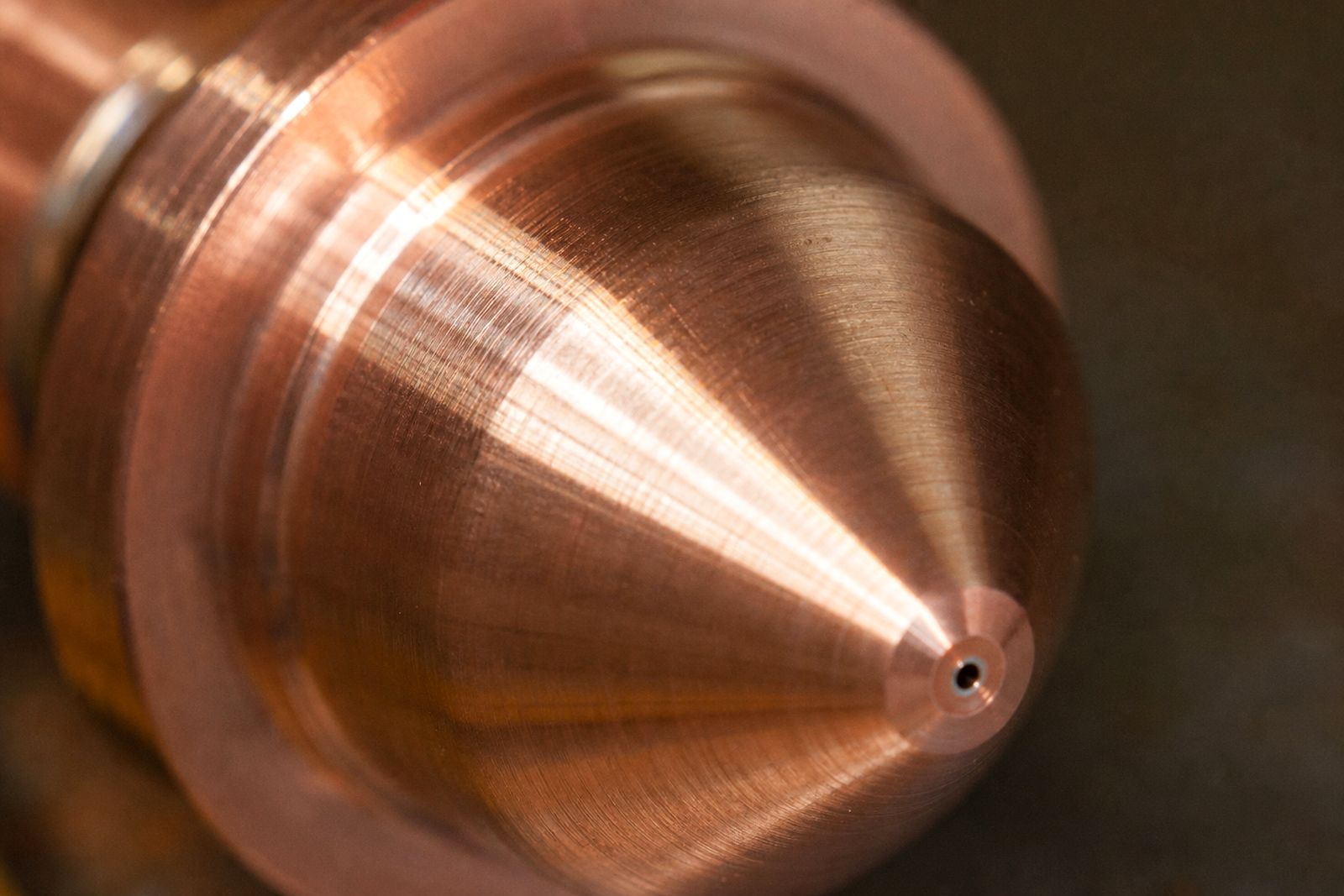
M1 series consumables cover the small-format parts used in 30 to 45 A hand plasma torches. They suit light sheet work, thin plate trimming and general hand cutting where a stable arc and clean kerf matter.
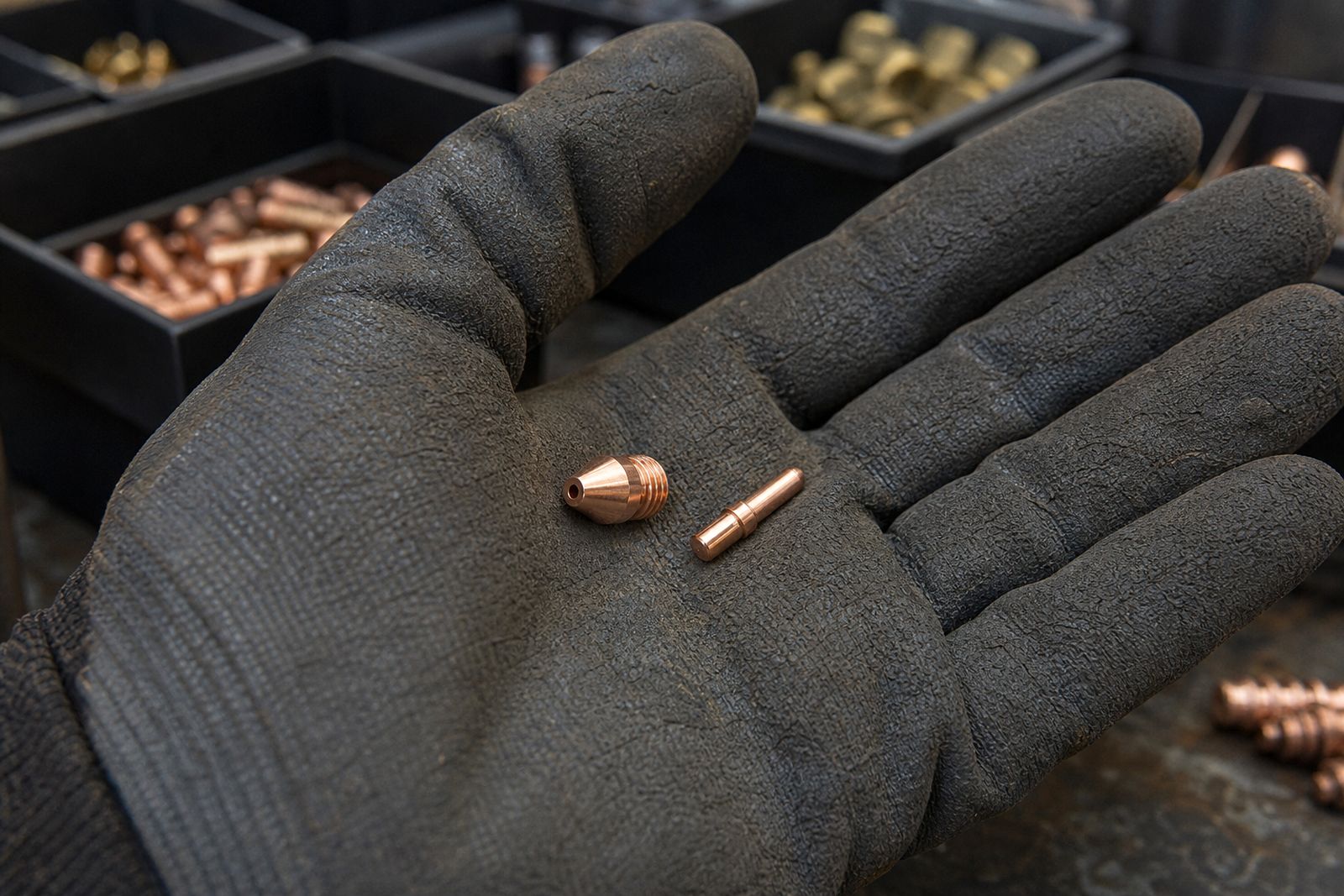
Built for lighter hand cutting
M1 series parts are the fine consumables used in lower-amperage hand torches. In this range the torch normally runs on 30 A, 40 A or 45 A settings, depending on the nozzle fitted and the cut needed. The set typically includes an electrode, nozzle, shield, swirl ring and retaining cap, all matched to the same torch series so gas flow and arc position stay consistent through the cut.
These parts are used where operators need control more than raw output. That includes ducting, brackets, electrical enclosures, thin base plates and general steel fabrication in smaller sections. On stainless and galvanised sheet, the right nozzle size helps keep dross down and reduces rework at the grinder.
- Best suited to hand torches in the 30 to 45 A class.
- Used for thin material, short runs and detail work.
- Available by torch series rather than mixed loose assortments.
- Counter collection in Kempton Park and courier dispatch to all provinces.
Current options and working limits
The amperage window on M1 consumables is narrow for a reason. A 30 A nozzle is meant for thinner material and tighter control, while 40 A and 45 A options give a little more cutting headroom for plate that would be slow on the smallest tip. Running above the rated nozzle current shortens part life quickly and can distort the orifice, even if the cut still gets through.
As a practical guide, 30 A setups are commonly used on light sheet and finer profiles. The 40 A option covers general workshop work where the operator needs a bit more speed. The 45 A set is usually the top end of this torch family and works best when cut quality is still more important than heavy-section output. If your job is regularly beyond that range, the M2 or M3 pages are the better fit.
- 30 A: thin sheet, finer kerf, slower travel speed.
- 40 A: everyday hand cutting on light to medium sections.
- 45 A: upper end of the series for thicker light plate.
- Fine-cut variants, where applicable, are intended for cleaner edges on thinner material.
M1 parts do not suit mechanised beds, high-duty production cutting or thick plate work that pushes heat back into the torch head. They are also not the right choice for operators trying to stretch one nozzle across mixed amperage settings all day, that usually ends in poor starts and uneven edge finish.
Where M1 suits the job floor
On East Rand fabrication floors, M1 parts are common where the torch is carried by hand from bench to bench and jobs change often. They fit workshops cutting mild steel sheet, maintenance teams trimming patch plates and smaller manufacturers making brackets, tabs and covers. Because the parts are small, operators usually keep spare electrodes and nozzles close by instead of waiting for a full torch strip when cut quality drops.
These consumables are not intended for power sources above the torch rating, nor for gouging work or long mechanised passes on thick sections. If your cuts often start at plate edges thicker than the torch was built for, or if the torch runs at maximum current for most of the shift, M1 will wear fast and cut consistency will drift. Moving up to the correct series matters when that happens, with the full consumable set matched to the torch family.
Torch setup, air and installation notes
M1 consumables are straightforward to fit, but hand torches still need clean mating surfaces and dry compressed air. Moisture and oil in the air line shorten electrode life and can mark the nozzle face. Around Gauteng this often shows up after a neglected compressor drain or an undersized filter bowl that fills up by mid-shift.
Before fitting new parts, let the torch cool, remove spatter from the shield area and inspect the torch head threads. Fit the swirl ring squarely, seat the electrode correctly and tighten the retaining cap to the torch maker's normal hand-tight standard. Over-tightening can damage smaller parts and make the next change awkward.
- Use clean, dry compressed air at the pressure set for the torch.
- Match electrode, nozzle and shield to the same M1 torch series.
- Check for worn O-rings, dirty threads and heat marks before refitting.
- Keep spare sets sealed and away from grinding dust.
We sell consumables only, by torch series. We do not supply machines, cutting tables, power units or repair work.
Part care and signs of wear
Operators usually notice M1 wear first at arc start. The torch begins to hesitate, the kerf widens or the edge gets rougher on material that normally cuts cleanly. A worn electrode pit will eventually affect the arc position, and a nozzle with a damaged orifice can throw the cut off centre even when the current setting looks correct.
For light fabrication, replacing the electrode and nozzle as a paired service item often gives better results than pushing one part further than the other. Shields and retaining caps last longer, but they should still be checked for spatter buildup, heat tint and thread damage. A swirl ring with visible cracking or burn marks should not stay in service, even if the torch still fires.
Storage counts more than some shops think. Keep bulk packs closed, keep loose parts out of oily toolboxes and separate used items from fresh stock, otherwise part identification gets messy and the wrong setup ends up in the torch.
What to send with your enquiry
Because M1 parts are matched by torch series, the clearest way to order is to give the torch series and the amperage you run most often. If there is an option between standard cutting and fine-cut work, include that too. Shops that cut mixed material should mention the usual thickness range, as that helps narrow the correct nozzle and shield combination.
When you send details through our contact form, include the information below if you have it. If not, a clear photo of the consumables laid out in order can help the team identify the set.
- Torch series or part reference from the old consumable.
- Usual current setting, such as 30 A, 40 A or 45 A.
- Material type and normal thickness range in millimetres.
- Whether the torch is used for standard cutting or fine-cut work.
- Quantity needed, including any bulk pack or refill subscription requirement.
- Delivery town, or whether you want to collect from our Kempton Park trade counter.
That keeps the order accurate and avoids mixing small M1 parts with items from a larger torch family.
What our Plasma Consumables customers say
Verified Google reviews
Questions we get asked
Can I run a 30 A nozzle at 45 A if I need to finish a job?
It is not recommended. Over-running the nozzle usually shortens consumable life fast and can spoil cut quality through nozzle distortion and unstable arc starts.
Do M1 consumables fit every 30 to 45 A hand torch?
M1 consumables are matched by torch series, so the parts must correspond with the correct M1 torch family and component layout.
Do you sell the torch or power source with these parts?
Plasma Consumables sells plasma consumables only, by torch series, and does not supply machines, tables, power units or repairs.
Also worth a look
Tell us about your refill plan
Send your torch series, amperage and cutting hours through our contact form, and we will come back with a practical pack.
Open the contact form